7 DAYS EASY RETURN POLICY★SECURE PAYMENT★24×7 CUSTOMER SUPPORT★MONEY BACK GUARANTEE★10+ YEARS IN BUSINESS★50,000+ HAPPY CUSTOMERS★50,000+ RATINGS ON FLIPKART★BEST SELLER ON FLIPKART★PAN INDIA DELIVERY★2 YEAR WARRANTY★MADE IN INDIA★DIRECT FROM MANUFACTURER★PREMIUM QUALITY FURNITURE★TRUSTED BY THOUSANDS OF CUSTOMERS★
7 DAYS EASY RETURN POLICY★SECURE PAYMENT★24×7 CUSTOMER SUPPORT★MONEY BACK GUARANTEE★10+ YEARS IN BUSINESS★50,000+ HAPPY CUSTOMERS★50,000+ RATINGS ON FLIPKART★BEST SELLER ON FLIPKART★PAN INDIA DELIVERY★2 YEAR WARRANTY★MADE IN INDIA★DIRECT FROM MANUFACTURER★PREMIUM QUALITY FURNITURE★TRUSTED BY THOUSANDS OF CUSTOMERS★
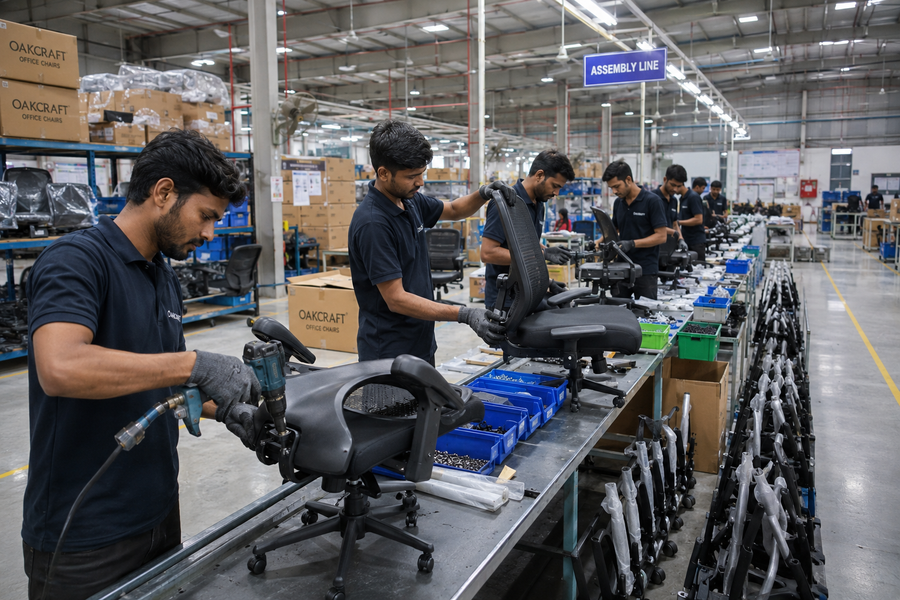
Panel-based system furniture built to a standard module grid at our own Delhi factory — so the floor you buy this year can be rearranged, extended and added to next year without replacing it.
Send us your floor plan and tell us how your team is likely to change.
Manufacturing since 2017Standard module gridModules kept in stockReconfigurableInstalled all India
The word is on every quotation in the market. What it usually means is "made in parts at the factory" — not "you can change it later". Those are completely different things, and you only find out which one you bought on the day you try to move something.
You're not sure what "modular" even covers in your quotation. Nobody defines it, and every supplier means something different by it.
You're confused about whether the panels are actually interchangeable, or whether each one was cut for exactly one spot on the drawing.
You're worried that moving a six-seater cluster will mean carpenters, cutting and touch-up paint — not unbolting and re-bolting.
You're afraid of what adding 20 seats costs in year two, when the system has been discontinued and nothing matches.
You've watched a reshuffle turn into a purchase, because reconfiguring the old desks cost more than buying new ones.
You're stuck with spare panels that fit nothing, because the module sizes were never standard in the first place.
You're being asked by management how this floor adapts to hybrid working, and the honest answer is that it doesn't.
What non-modular really costs
The bill doesn't arrive on day one. It arrives in year two.
A fixed floor and a genuinely modular one cost about the same to buy. The difference shows up the first time you change something. Here's a 100-seat floor over three years, assuming one team expansion and one departmental reshuffle — which is a normal three years, not a bad one.
What you'll need to do
On a fixed floor
Extra cost*
Add 20 seats in year two
The system's been discontinued. You buy 20 desks that don't match, or replace a whole wing to keep it looking consistent.
₹1,40,000
Move a department
Panels were cut to fit exactly one position. Reconfiguration needs carpenters on site, cutting, and touch-up that never quite matches.
₹90,000
Change the density
Hybrid working means fewer fixed desks and more shared ones. On a fixed system, that's a new purchase, not a rearrangement.
₹75,000
Replace a damaged panel
Non-standard size, no stock, no drawing on file. You replace the run instead of the panel.
₹35,000
Downtime
Every one of the above happens on a working floor, over a weekend that becomes a week.
₹60,000
What "modular in name only" costs across three years
₹4,00,000
Swipe the table sideways to see the amounts →
*Our estimates, based on reconfiguration jobs we've quoted for floors we didn't originally supply. The year-two expansion line is the one that catches people, because nobody budgets for it when they sign.
How we build modular
Standard modules, so the floor can change its mind
Modular only means something if the parts are interchangeable and still exist later. That's an inventory and discipline problem more than a design one, and it's where most suppliers quietly give up.
Everything sits on one module grid
Worktops, panels, raceway and storage are built to standard module widths rather than cut to one drawing. A panel from one cluster fits another. A worktop from the finance wing fits the sales wing. Nothing is a one-off.
Standard module widths across the whole floor
Panels, brackets and raceway interchangeable between clusters
Your layout recorded as modules, not as a one-off drawing
It comes apart the way it went together
Connections are bolted and bracketed, not glued and nailed. A cluster can be unbolted, moved and re-bolted by a service team over a weekend — without carpenters, without cutting, and without a repaint.
Bolted connections, accessible without dismantling the run
Raceway and cable routes that reopen instead of being broken
We'll do the reconfiguration for you, or hand your facilities team the drawing
Your modules stay on record and in stock
We keep the module list, the laminate shades and the panel specification against your project. When you add twenty seats in year two, you order the same modules — not something that merely looks close.
Project-wise module and finish record kept on file
Panels, worktops and raceway available for future phases
We tell you in advance if a module is being phased out
Plan view
What "built from modules" actually looks like
Same four worktop modules in both drawings. Nothing is cut, nothing is custom, and nothing is thrown away between the two. That is the whole idea, and it is easier to show than to describe.
Drawing 1 — a four-seat linear runMonday.Four modules bolted into one run, sharing a single raceway.Drawing 2 — the same four modules, rearrangedEighteen months later.Unbolted, turned, re-bolted. No cutting, no new parts, no touch-up.
If a supplier cannot draw your floor as a count of standard modules, that tells you what you are actually buying.
Use this on every supplier
Six questions that separate modular from "modular"
Ask these of anyone quoting you modular workstations — us included. A supplier who genuinely builds to a module grid answers all six in a minute. One who doesn't will start talking about finishes.
Is this panel interchangeable with that one?
Point at two panels in the drawing that look the same size and ask whether they're the same part.
What you want to hear: yes, and here's the module width.
What does it take to move a six-seater cluster?
Ask who does it, what tools, how long, and whether anything gets cut.
What you want to hear: unbolted and re-bolted, no cutting, a weekend.
Can I buy twenty more seats in two years?
Ask whether the same modules will still exist, and what happens if they don't.
What you want to hear: yes, and we keep your module list on file.
If one panel is damaged, what do I replace?
Ask whether it's the panel, the run, or the cluster.
What you want to hear: just that panel, it's a standard module.
Where do the wires go when I rearrange?
Ask what happens to power and data when a cluster moves.
What you want to hear: the raceway reopens and re-routes.
Can I see the module list, not just the layout?
A genuine modular system has a parts list. A one-off has only a drawing.
If your floor is settled and you don't expect it to change, our standard workstation range may suit you better. Same factory, same installation team — simpler system.
What actually happens
Three floors, three ordinary years
None of these are disasters. They are the normal things that happen to a working office, and they are the moments when you find out what you bought.
Year one · the team grows
"We've hired 18 people and they start on the 1st"
This is the most common call we get, and it is always short notice. On a fixed floor it means finding something that nearly matches, and living with a wing that looks slightly different from the rest.
On a module grid: you order the same modules and extend the runs.
Year two · the reshuffle
"Finance is moving to where support sits"
Two departments swap places over a weekend. On a fixed floor this needs carpenters, and Monday morning arrives with touch-up paint still drying and cables taped along the skirting.
On a module grid: unbolt, move, re-bolt, re-route the raceway.
Year three · the density changes
"Half the team is in twice a week now"
You need fewer fixed desks and more shared ones, plus a couple of quiet zones. On a fixed floor that is a fresh purchase and a fresh disposal problem.
On a module grid: raise a few panels, re-cluster, keep the desks.
We would rather you planned for these on day one than discovered them later. Tell us on the call what your headcount has done over the last two years — that is usually a better guide to what you need than the current seating plan.
Straight talk
Modular isn't right for every floor
Better you hear this now than after a site visit.
Probably not for you if…
Your layout is settled and you don't expect the team or the floor plate to change. You'd be paying for flexibility you'll never use — buy fixed and put the difference elsewhere.
Probably not for you if…
You need eight or ten desks. A module grid earns its keep across a floor, not across one room.
Worth it if…
Your headcount moves, departments get reshuffled, or you're fitting out in phases. That's exactly the situation the module grid is for.
Worth it if…
You run co-working, a shared office or a campus where layouts change between tenants and you need the same parts to keep working.
What we manufacture
Modular systems we build
All of these sit on the same module grid, so they mix on one floor and share parts.
2 to 8 seaters
Linear module systems
The workhorse cluster. Shared spine, sharing screens, raceway along the run. Extend a run by adding modules rather than rebuying it.
Panel-based
Panel & cubicle systems
Where privacy or noise matters. Panel heights change without changing the desks underneath — useful when a floor's use changes.
Single & twin
Manager & L-shape modules
Corner configurations built from the same grid, so a manager desk can become two open seats when the org chart changes.
Add-on modules
Storage & accessories
Pedestals, mobile caddies, overheads, CPU holders and power modules — sized to the grid so they move with the desk.
Useful when you're working out seat counts and future expansion. Everything below is standard — which is what makes the parts interchangeable.
Spec at a glance
Worktop thickness
25 mm, sealed edge banding
Worktop depth
600 / 750 mm
Module increments
1050 / 1200 / 1350 / 1500 / 1800 mm
Panel heights
1050 / 1200 / 1500 mm
Screen above worktop
350 / 500 mm
Understructure
Powder-coated MS frame, bolted
Raceway
Continuous, re-openable along the spine
Power
Flip-top or pop-up, module-positioned
Finish
Laminate, shade recorded per project
HSN
9403 · GST 18%
Non-standard sizes are possible, but we'll tell you honestly when a custom size breaks the interchangeability you're paying for. Usually it isn't worth it.
About us, without the adjectives
Here's what we are, on paper
Every one of these is checkable before you raise a purchase order.
2017Manufacturing since
3,000+ m²Factory floor, Bawana
100+People on the floor
25 seatsMinimum project
All IndiaSupply & installation
UdyamRegistered manufacturer
GeMRegistered, MSE preference
HSN 9403GST 18%, invoiced properly
Recent work
Some floors we've delivered
IT services · Noida
320-seat floor
Linear modules and manager configurations on one grid, against a fixed move-in date. Chairs supplied on the same order.
Hospitality · Delhi
Back-office & cabins
Modular back-office clusters with cabin desks and visitor seating, finished to the designer's scheme.
Government department
Supplied via GeM
Furniture supplied as the OEM under MSE purchase preference, with documentation to match the tender.
What buyers said afterwards
“Oakcraft delivered a smooth bulk-order experience from start to finish. The chairs were well-finished, comfortable, and delivered as committed. Their team was responsive and professional throughout the process.”
RA
Rohan AggarwalProcurement Team, TATA
“We were impressed with the overall quality and consistency of the office chairs supplied by Oakcraft. The ordering process was straightforward, delivery was well coordinated, and the support team was helpful whenever we needed assistance.”
MN
Mohan NagarAdministration Team, Okaya
Get a module layout
Send us the floor plan
A PDF, a CAD file or a photo of the printed plan is enough. Tell us roughly how the team might change, and we'll plan the grid around that rather than around today.
What your purchase team will ask before releasing a PO. Government and institutional orders follow the tender terms instead.
Minimum project size
25 seats for a supplied-and-installed modular project
Before quoting
Module layout and seat count from your floor plan, free of charge
Before production
Site measurement and written layout sign-off
Lead time
Typically 3–5 weeks from sign-off, depending on size, finishes and site readiness
Installation
Carried out under our own supervisor, anywhere in India
Module record
Your module list and finishes kept on file for future phases
Reconfiguration
We can quote and carry out reconfiguration later, or hand your facilities team the drawing
Warranty
Against manufacturing defects — confirmed in your quotation by system
Payment
Advance with the PO, balance before dispatch. Project-wise terms for larger fit-outs.
GST
18% (HSN 9403), quoted separately
Coverage
Supply and installation anywhere in India
Swipe the table sideways →
Free, no sales call
The modular buyer's questions, in one page
Written for whoever has to compare three "modular" quotations that all say the same thing. Two pages, no product catalogue.
The six questions from this page, laid out to fill in per supplier
What a real module list looks like, and what to ask for instead of a drawing
Standard module widths, so you can check whether a quote is actually standard
A rough way to cost reconfiguration before you sign, not after
Before you enquire
Questions we get a lot
What actually makes a workstation modular?
Three things: the parts are built to standard module sizes, they're interchangeable between clusters, and they're still available later. If any one of those is missing, it's furniture that arrived in pieces — not a modular system.
Are you a manufacturer or a trading company?
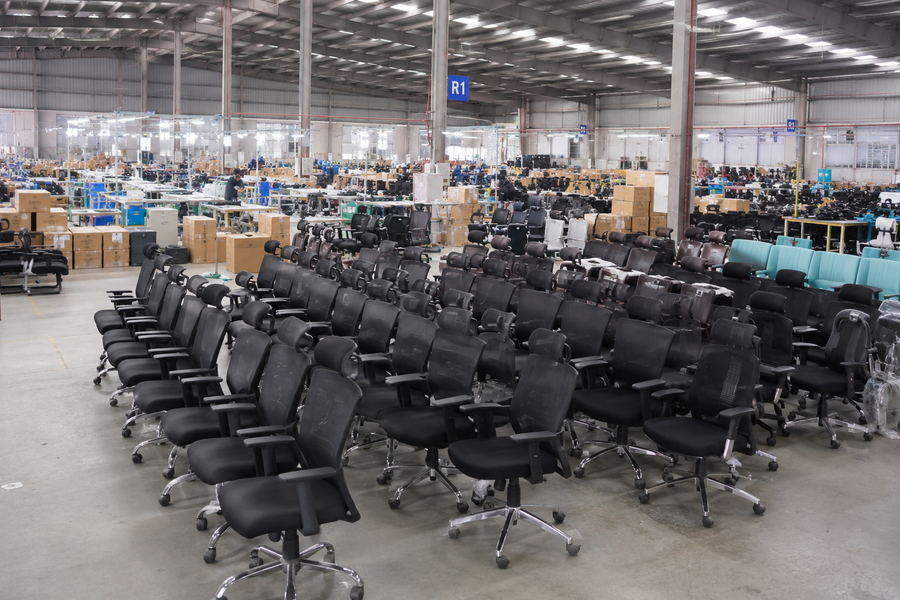
Manufacturer. We build at our own unit in Poothkhurd, Bawana, North West Delhi, registered under Udyam as a manufacturing enterprise (UDYAM-DL-06-0171040), and we supply as the OEM. Visit and see the modules being made if you like.
Can we rearrange the floor ourselves later?
Yes. Connections are bolted, so a cluster can be unbolted, moved and re-bolted. We'll give your facilities team the module drawing, or quote to do the reconfiguration for you.
Will we be able to add matching seats in two years?
That's the point of the grid. We keep your module list, laminate shades and panel specification on file, and keep the components available. If a module is ever being phased out, we tell you before you're stuck.
Do you supply and install across India?
Yes. We supply and install anywhere in India, with our own supervisor running the installation rather than handing your site to unsupervised local labour.
Is modular more expensive than fixed furniture?
Upfront, they're close — sometimes modular is slightly higher. The difference shows the first time you change something. If your floor genuinely won't change, fixed is the better buy and we'll tell you so.
Can you match our existing modular furniture?
Send photos and dimensions and we'll answer honestly. Sometimes we can match it; sometimes starting a clean grid on one wing works out better than chasing a system somebody else discontinued.
Rather talk to a person?
These three handle modular projects
Call or message any of them directly. You'll get a person, not a ticket number.
Seat count, city, and roughly how your team might change. That's all we need to come back with a module layout and a price — usually within one working day.
Take the one-pager with you — the six questions, laid out so you can fill them in per supplier and see who's actually modular. Free, and no sales call attached.
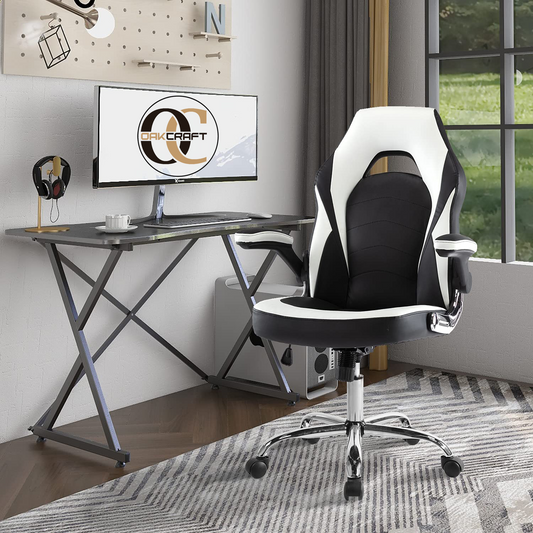
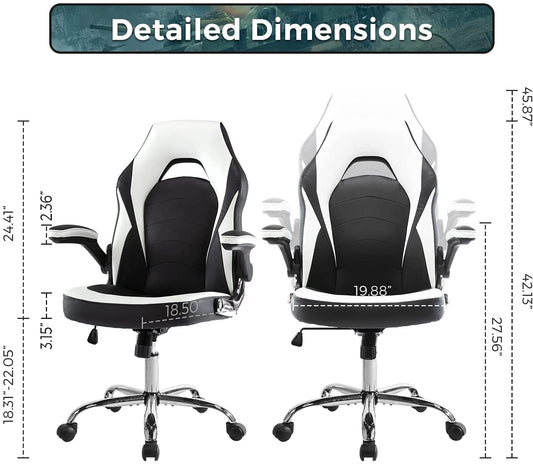
Description:Experience unparalleled comfort and style with the Oakcraft Blaze High Back Leatherette Gaming Chair. Designed for avid gamers and professionals alike, this chair boasts a sleek and ergonomic high-back design, providing optimal support for long gaming sessions or work hours. The premium leatherette upholstery...
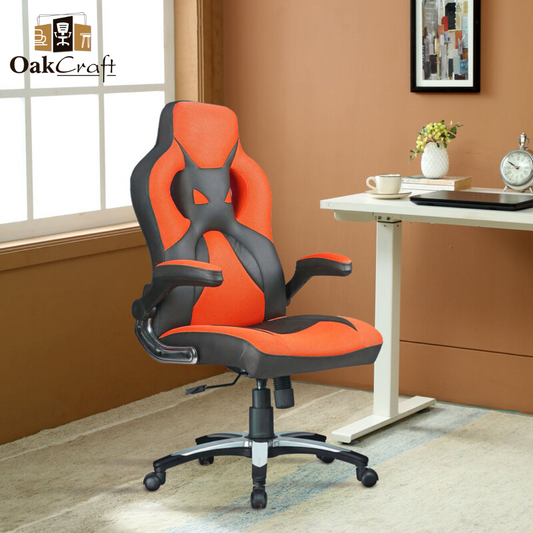
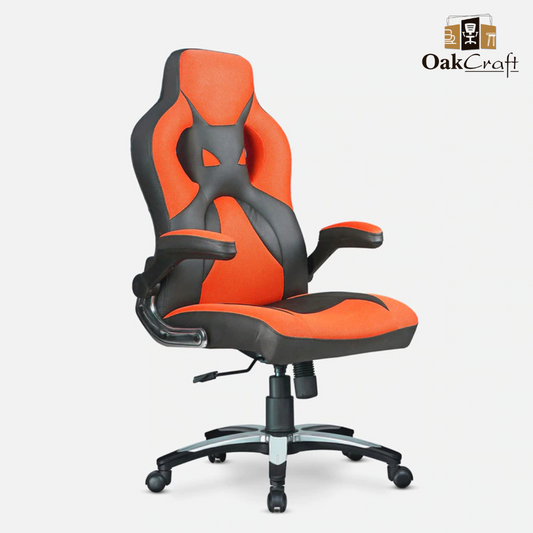
Immerse yourself in the ultimate gaming experience with the Oakcraft Vigil High Back Leatherette Gaming Chair. Designed for both comfort and bold style, the high-back silhouette delivers excellent support during intense gaming sessions, while the premium leatherette upholstery gives it a striking, hero-grade look....
Description:Introducing the Oakcraft Hurricane High-Back Ergonomic Mesh Office Chair – an epitome of comfort and efficiency. Immerse yourself in superior lumbar support with the high-back design crafted from breathable mesh, ensuring optimal ventilation for extended productivity. Seamlessly navigate your workspace with the 360-degree swivel...


 2 to 8 seaters
 Panel-based
 Single & twin
 Add-on modules