
How to Clean an Office Chair — Mesh, Leatherette and Fabric
Most people never clean their office chair until something spills on it. By then the damage that matters has usually already happened, and it isn't the visible dirt.
Oakcraft manufactures office and institutional seating in Delhi, so this is written from the build side — including the cleaning mistakes that void warranties.
Quick answer
How do you clean an office chair? Vacuum first, then clean by material: mesh with a damp cloth and mild detergent, leatherette with a barely damp cloth and no solvents, fabric with a foam-only upholstery cleaner. Never soak any of them, and always air-dry away from direct sun.
How often? A quick vacuum monthly, a proper clean every three to six months. In humid or non-air-conditioned offices, more often.
The one thing that damages chairs fastest? Over-wetting. Water that reaches the foam takes days to dry, and in Indian humidity that means odour and mildew inside a cushion you can't open.
Before you start: what will wreck your chair
Getting this wrong costs more than leaving the chair dirty.
- Bleach or ammonia — strips colour and degrades PU coating permanently
- Solvents, thinner, acetone, spirit — dissolves leatherette finish on contact
- Soaking anything — water in the foam means mildew and odour, and foam can take days to dry through
- Hard scrubbing on mesh — stretches the weave, and a sagging mesh back doesn't recover
- Direct sunlight to dry — cracks leatherette and fades fabric
- Hair dryers or heat guns — warps plastic components and hardens PU
Always spot-test anything new on the underside of the seat first, and wait for it to dry before going further.
Step 1: Vacuum and disassemble what you can
Vacuum the seat, backrest and all the crevices with a brush attachment. Most of what feels like grime is dry dust and crumbs, and removing it dry means less wet work.
Remove headrest and armrest pads if they detach — they're usually the dirtiest parts and much easier to clean off the chair.
Step 2: Clean by material
Mesh
Mesh hides dirt well and holds dust deep in the weave.
- Vacuum thoroughly with a brush attachment
- Mix a few drops of mild liquid detergent into warm water
- Dampen a microfibre cloth — wrung out until barely wet
- Wipe in the direction of the weave, not in circles
- Wipe again with a clean damp cloth to lift residue
- Air-dry completely, away from direct sun
Don't scrub. Mesh is under tension by design; stretching it is permanent and a sagging back can't be fixed.
For stubborn spots, a soft toothbrush and the same solution works — light pressure, along the weave.
Leatherette / PU
The material most people clean wrongly, and the one most affected by Indian conditions.
- Wipe with a dry microfibre cloth first
- Use a barely damp cloth with a drop of mild soap
- Wipe dry immediately with a second clean cloth
- Never leave moisture sitting on the surface
Never use alcohol, solvent, thinner, bleach, or any "multi-surface" spray containing them. They dissolve the PU coating, and the cracking that follows is irreversible.
The Indian problem nobody mentions: sweat is mildly acidic and, over months, degrades PU faster than any spill. It concentrates at the seat front, the armrest tops and the mid-back — exactly where cracking starts in year two or three. In a non-air-conditioned office, wiping those three areas dry once a week does more for the chair's life than any deep clean.
A small amount of leather conditioner every six months helps keep the surface flexible, though check it's rated for synthetic PU rather than genuine leather.
Fabric
- Vacuum thoroughly
- Check the manufacturer's cleaning code if there is one — W means water-based cleaner, S means solvent-only, X means vacuum only
- Use upholstery cleaner as foam only — spray onto the cloth, never onto the seat
- Blot stains; don't rub, which spreads them and works them deeper
- Wipe with a clean damp cloth, then air-dry fully
Fabric is the hardest of the three to clean properly, because anything that gets it clean also tends to get it wet.
Step 3: The parts everyone forgets
Casters. Hair and thread wrap around the axles and are the usual cause of a chair that suddenly rolls badly. Pull each caster out — they're a friction fit and come out with a firm tug — cut the tangle away with scissors, wipe the wheel, and push it back in. Ten minutes, and it fixes a problem most people live with for years.
The gas cylinder shaft. Wipe the exposed metal shaft clean. Grit sitting on it gets dragged past the cylinder seal every time you adjust the height, which is one of the things that shortens the life of the part that fails first.
The base. Dust and spills collect where the spokes meet the column. A damp cloth is enough.
Armrest pads. The highest-contact surface on the whole chair and almost never cleaned. On many chairs these are separately replaceable when they finally crack.
Common stains
| Stain | Approach |
|---|---|
| Tea or coffee | Blot immediately. Mild detergent solution, blot again. Speed matters more than method. |
| Ink | Leatherette: barely-damp cloth, immediately. Fabric: spot-test first — most home remedies spread it. |
| Grease or food | Blot up the excess, then a mild degreasing detergent. Never rub. |
| Sweat marks | Mild detergent on mesh or fabric. On leatherette, wipe dry regularly rather than treating later. |
| Odour | Usually moisture in the foam. Dry the chair thoroughly in ventilated shade. Baking soda left on fabric overnight then vacuumed off helps. |
The rule for every spill: blot, don't rub. Rubbing pushes it into the foam, where you can't reach it.
Maintenance that actually extends the life
Cleaning keeps a chair pleasant. These keep it working:
- Sit down under control. Dropping into a chair shock-loads the gas cylinder seal. This costs nothing and matters most.
- Check bolts twice a year. Turn the chair over and tighten everything on the seat plate. Loose bolts are the usual cause of a chair that rocks or creaks.
- Match casters to your floor. Hard nylon for carpet, soft polyurethane for tile and wood. Hard casters on a hard floor scratch it, and it's a ₹300 fix people never make.
- Keep it out of direct sun. A chair parked by a window fades and cracks years earlier than one that isn't.
- Replace parts rather than chairs. A worn gas cylinder is ₹400–700. A cracked armrest pad is a few hundred. What each part is and what it costs →
When cleaning won't save it
Some things aren't dirt. Replace the chair if you're seeing:
- Foam flattened enough that you feel the base through the seat
- Mesh sagging permanently, or torn at its mounting points
- Leatherette cracked or peeling across the seat surface
- Cracks in the base, especially at the spokes near the caster sockets
- Backrest that won't hold position, or a mechanism gone loose
One failed part on a sound chair is a repair. Three at once is a chair telling you it's done.
Oakcraft chairs and parts
Oakcraft manufactures office, gaming and institutional seating in Delhi and stocks replacement parts for the chairs we make — casters, armrest handles and spares — because a chair with one worn component shouldn't become landfill. Tell us the model and we can usually tell you what fits.
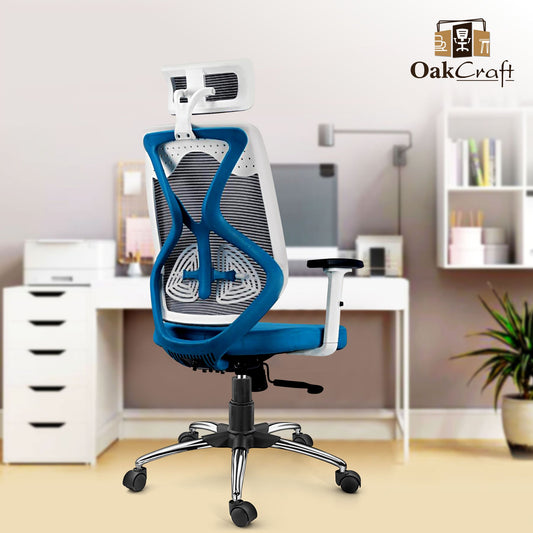
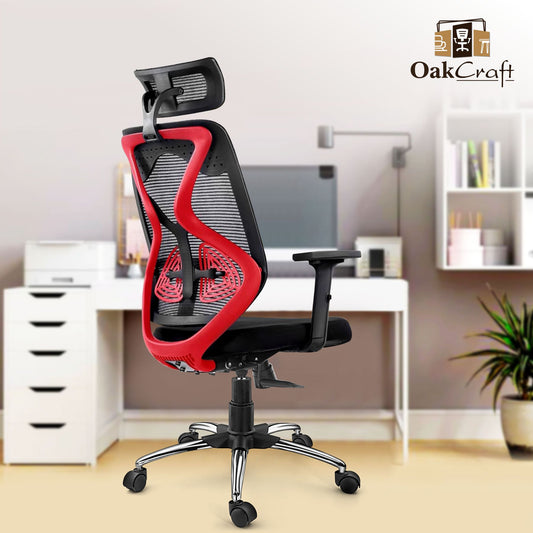
For warm and non-air-conditioned rooms → Oakcraft Matrix High Back Ergonomic Mesh Office Chair — breathable mesh back, high-back design with lumbar support, centre-tilt mechanism with lock. Mesh is also the easiest of the three materials to keep clean.
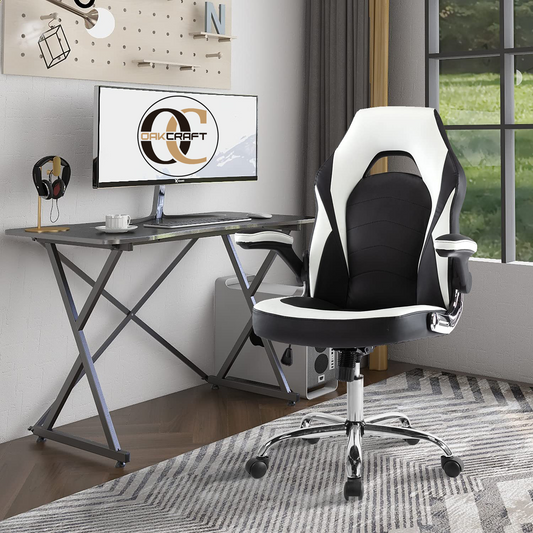
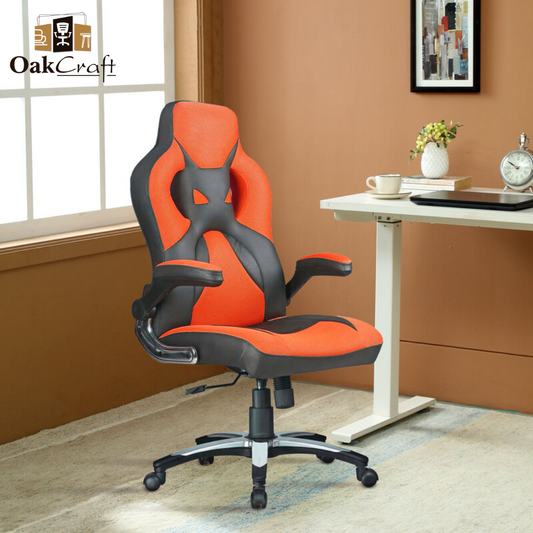
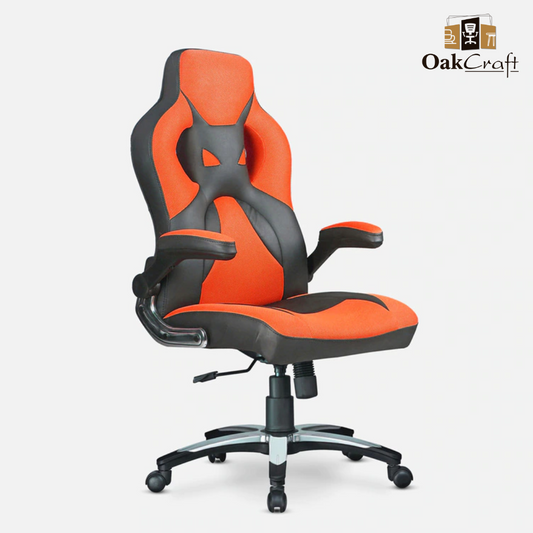
For air-conditioned setups → Oakcraft Vigil High Back Leatherette Gaming Chair — from ₹8,400. Premium leatherette, which wipes clean faster than fabric or mesh.
Three-year warranty against manufacturing defects, replacement over repair.
Bulk enquiries: contact@oakcraft.in or WhatsApp [NUMBER].

Frequently asked questions
How do you clean a mesh office chair? Vacuum with a brush attachment, then wipe along the weave with a microfibre cloth wrung out in warm water with a few drops of mild detergent. Wipe again with clean water and air-dry away from sun. Don't scrub — stretched mesh doesn't recover.
How do you clean a leatherette or PU office chair? Dry-wipe first, then use a barely damp cloth with a drop of mild soap, and dry immediately with a second cloth. Never use alcohol, solvent, thinner or bleach — they dissolve the PU coating permanently.
Can you use disinfectant wipes on an office chair? Sparingly, and not on leatherette — most contain alcohol, which degrades PU. On mesh and fabric they're acceptable occasionally, but plain mild detergent is gentler for regular cleaning.
How often should an office chair be cleaned? A vacuum monthly and a proper clean every three to six months. In humid or non-air-conditioned offices, clean more often and wipe sweat-contact areas weekly.
How do you get rid of a smell in an office chair? Odour usually means moisture in the foam. Dry the chair thoroughly in ventilated shade. For fabric, baking soda left overnight and vacuumed off helps. Avoid adding more moisture.
How do you clean office chair wheels? Pull each caster out — they're a friction fit — cut away the tangled hair and thread with scissors, wipe the wheel, and press it back in. This is the usual fix for a chair that has started rolling badly.
Does cleaning an office chair void the warranty? Correct cleaning doesn't. Using solvents, bleach or excessive water can cause damage that most warranties exclude, since it's user damage rather than a manufacturing defect. Spot-test anything new on the underside first.